Watercolor and Oil Painting Best Painters of the History of Art
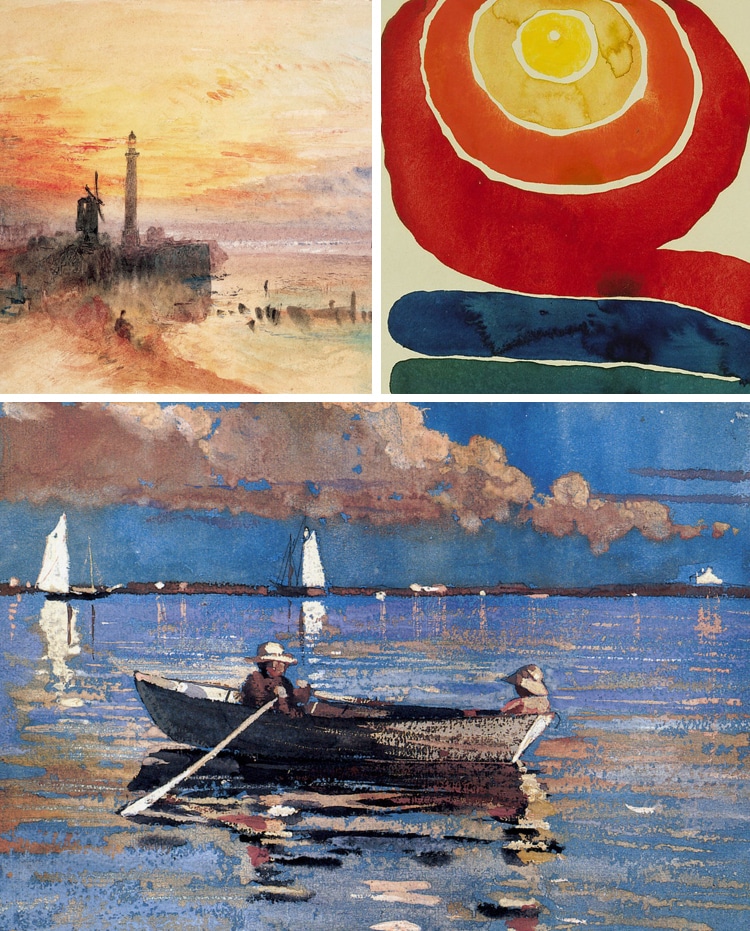
Watercolor painting is one of the most attainable forms of art. More likely than non, everyone has tried this type of painting at some betoken in their life, whether it exist in art form as a child or just discovering it every bit an adult. Despite this familiarity, all the same, many people don't know its rich history and some of the most famous watercolor artists who have fabricated the medium what it is today.
Like to fabric art, watercolor painting has roots in Paleolithic Europe, but it gained some popularity in manuscript illumination in the Middle Ages. Using brightly colored pigments, artists illustrated modest scenes and decorative designs in the margins of handwritten books. These elaborate texts weren't for everyone—it took four people to create i illuminated manuscript—and the often-religious works were more often than not confined to monasteries.
The Renaissance brought watercolor painting into the spotlight. Information technology went beyond decorative manuscripts and into the works of artists like Albrecht Dürer. He, similar other easel painters during that time, used watercolor for sketches, copies, or breezy drawings. Watercolor painting was besides adopted by the elite form as part of their overall didactics and eventually popularized—particularly in England—as a fashion to chronicle i'south travels. But while watercolor painting was well known, it was not taken equally seriously every bit oil painting or printmaking.
In the 19th century, however, watercolors had a major bump in condition. In that location was a general excitement about worldwide exploration, and wildlife and nature illustrations were used to illustrate scientific publications. Artist and ornithologist John James Audubon represents the acme of this movement, and he used watercolor painting to help bring his realistic drawings of birds to life. His famous book,The Birds of America (1827 – 1839), identified 25 new species. With it, he began an artistic tradition that still lives on today—field guides as illustrated with watercolors.
While Audubon had a restrained, technical approach to his work, other famous watercolor artists weren't as precise. Georgia O'Keeffe, for instance, played with the fluidity of the medium to create paintings that are beautiful fields of intense color. Like Audubon, she was inspired by the natural world, merely her interpretation of it is the complete opposite. Together, they demonstrate the incredible range that watercolor has.
To understand the appeal of watercolor painting today, learn more most some of the most famous watercolor artists throughout history.
Albrecht Dürer (1471 – 1528)
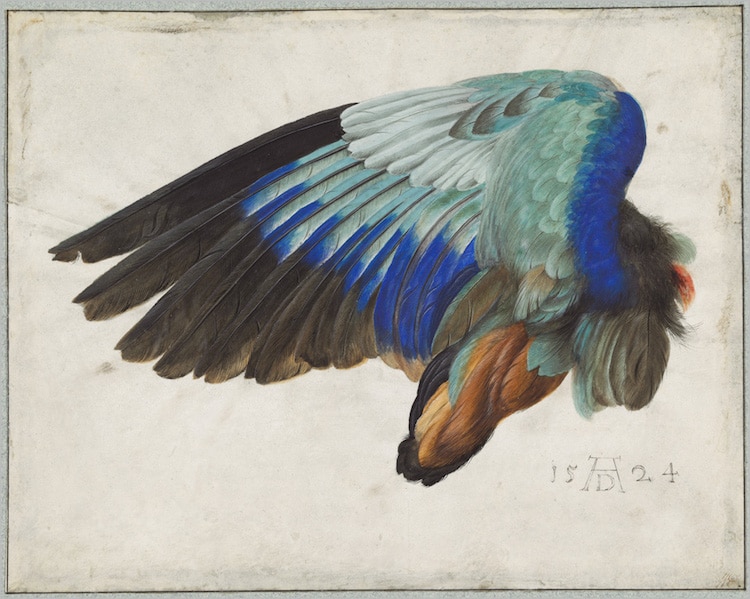
"Left Wing of a Blue Roller," circa 1500 or 1512. (Photograph: Public Domain)
Albrecht Dürer was a man of many talents and known for his paintings, woodcuts, and engravings. In terms of watercolor, he was considered one of the first prominent European painters to employ the medium in his work. This took the form of sketches of landscapes and nature, which we're all the same able to see today thank you to his virtually-obsessive collection of work.
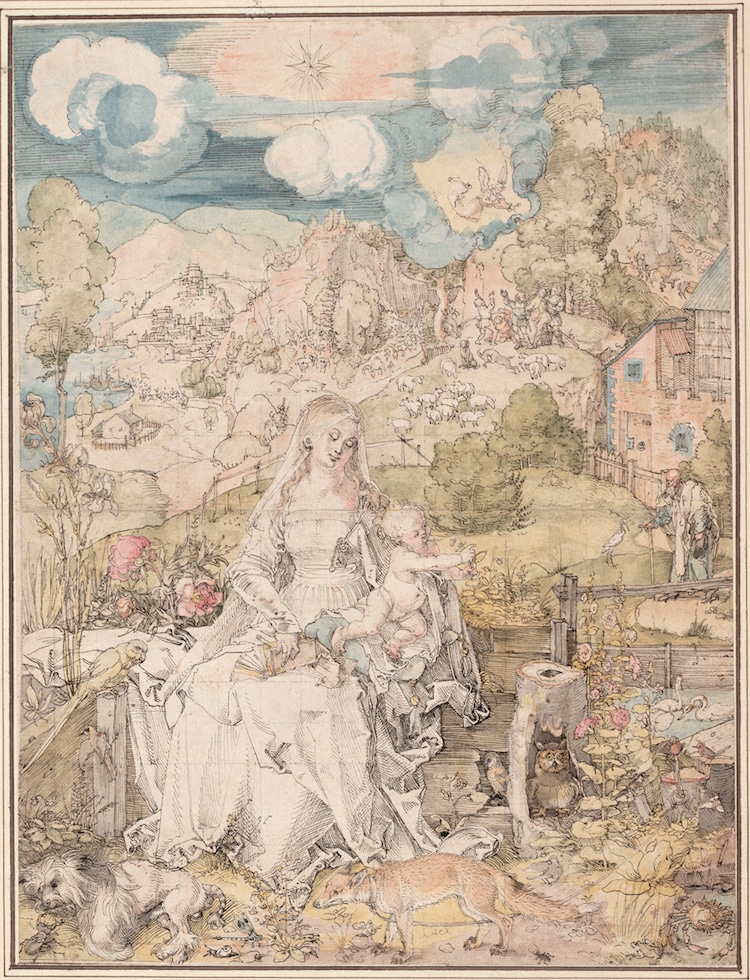
"The Virgin and Kid with a Multitude of Animals and Plants," circa 1503. (Photograph: Public Domain)
J.M.W. Turner (1775 – 1851)
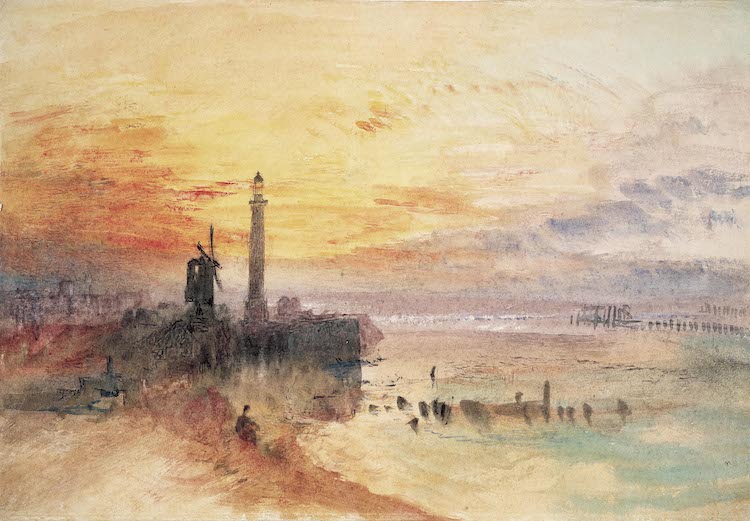
"Great Yarmouth Harbour, Norfolk," circa 1840. (Photo: Public Domain)
Like Dürer, J.M.W. Turner dabbled in more watercolor painting. Counting poetry and teaching as part of his interests, his general artistic talent was nurtured from a young historic period. He used his skills in watercolors to show in exhibitions and produce commercial works that provided him his "first real income." Later, Turner used the medium every bit a fashion to relate his travels—his passion for it never waning. The last decade of his working life featured a surge in watercolor painting production.
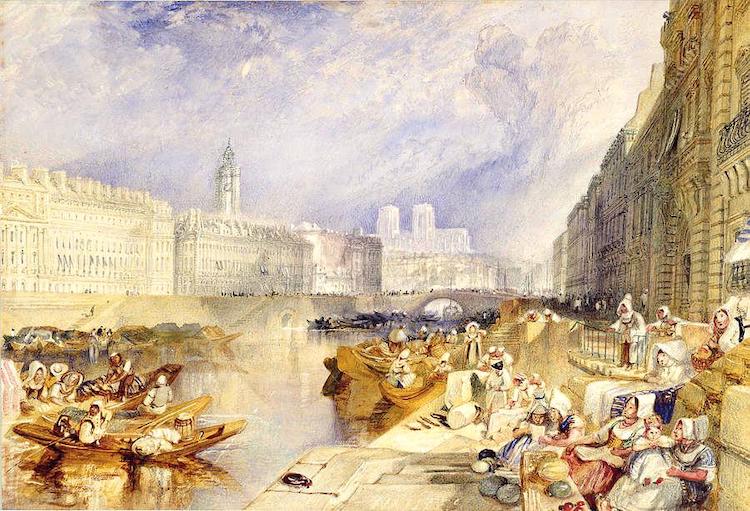
"Nantes from the Ile Feydeau," circa 1829-1830. (Photo: Public Domain)
William Blake (1757 – 1827)

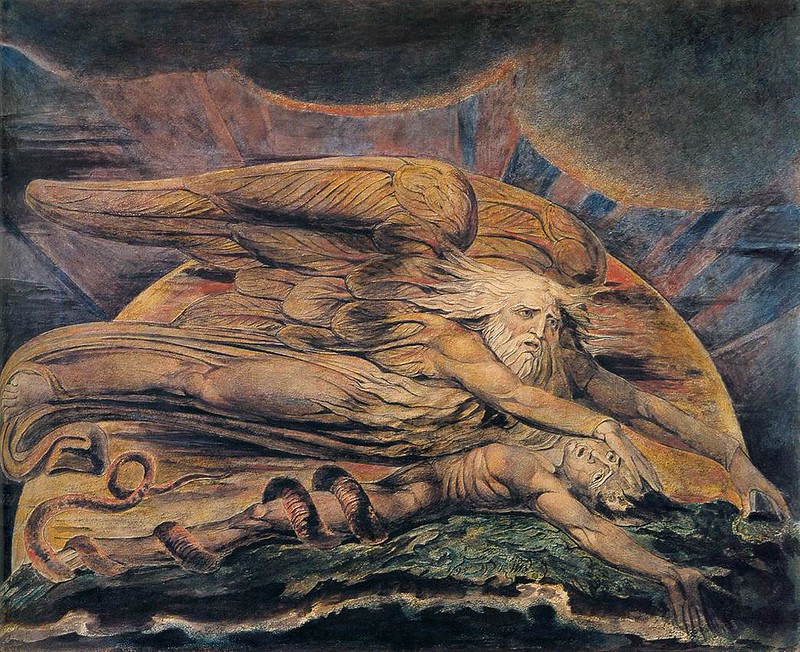
William Blake is considered 1 of the greatest poets in the English language, but his art is noteworthy too. After studying it as a child, he had an apprenticeship with an engraver before trying watercolor painting. Somewhen, he perfected his technique of "fresco," which is basically monotype printing; he first painted a design on a flat surface (like a copper plate) and and so applied it to paper. The designs were so individually finished in ink and watercolor, ensuring that each image was one of a kind.
0 Response to "Watercolor and Oil Painting Best Painters of the History of Art"
Postar um comentário