Read about Salingers life. Know his life well enough to know what he contributed to literature.
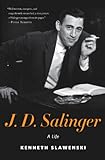 Before I say annihilation nearly Kenneth Slawenski's compelling only adoring biography of J.D. Salinger, I have a question: does anyone really, really empathise simply why Seymour Glass blows his brains out at the stop of "A Perfect Day for Bananafish"? The editors of The New Yorker didn't, although they somewhen published it. John Updike didn't, but that didn't keep him from calling the story a archetype. Vladimir Nabokov thought it was an "A-plus story" but never said why. The story was published in 1948, three years earlierThe Catcher in the Rye, and it's been confounding readers e'er since.
Y'all remember what happens. A married couple, Seymour and Muriel, are vacationing in Miami. Muriel, pretty but vapid, sits alone in a hotel room, drying her nails and talking on the phone to her mom, who wants her to come dwelling house. The mom thinks Seymour is crazy. She cites instances, says something about the regular army releasing Seymour from the infirmary too soon. Muriel shrugs it off and talks nigh mode. Meanwhile, Seymour is on the embankment talking to Sybil, a petty girl he has come to know. They talk near Muriel, whom Seymour doesn't seem like. Concerning of zip, Seymour quotes T.Southward. Eliot. Seymour and Sybil take a raft and hit the waves. He tells her most bananafish, which crawl into underwater caves, eat then many bananas they tin't exit, and die. Sybil claims to see such a fish and Seymour suddenly decides to go back to shore. He heads for his hotel room. On the elevator upwardly, he accuses some other invitee of staring at his feet and being a God damned sneak well-nigh it. He goes to his room, sees Muriel asleep on the bed, puts a gun to his head and fires. Cease of story.
WTF? Critical analysis seems to turn on the trivial girl'southward name: Sybil, therefore Sibyl, the mythological seer. Slawenski, a good if somewhat stiff reader of Salinger, offers an fifty-fifty more complicated theory that suggests Seymour spent besides much time reading Eliot and Blake. Both ideas may be perfectly correct, but they ignore the fact that Seymour packed the gun to begin with, beside which Eliot and mythology just seem like then much literary filigree. Presumably, Seymour feels trapped, like the bananafish, simply the events of this mean solar day offering less than perfect motivation. It'south not clear even Salinger knows why Seymour killed himself, because he keeps coming back to it in subsequent stories, as if there's something he forgot to say, some item he meant to add.

 The story is the kickoff to9 Stories, a classic collection distinguished past ambivalence and ellipsis. It was likewise the beginning of a long journey. In the 25 years of Salinger's publishing life, Seymour was his constant companion, evolving in seemingly autobiographical means as the author became more immersed in Eastern philosophy. He's the bright spiritual loner, likewise preoccupied with the next world to connect with this one, and in death he becomes a ghost his family cannot exorcise. InFranny and Zooey, Seymour's little sis has a nervous breakdown on the route to spiritual perfection. InEnhance Loftier the Roofbeams, Carpenters, a hilarious social comedy, brother Buddy recalls the disastrous events of Seymour's nuptials twenty-four hours. InSeymour: An Introduction, Buddy circles around his memories of Seymour, trying to make some sense of him. It's Salinger's about direct effort to say who, what or why Seymour is, and it'south a numbing experience; footling more than than an endless ramble, and quite the longest novella ever written. Buddy mentions a short story he wrote in the late forties, where Seymour "not only appeared in the mankind but walked, talked, went for a dip in the bounding main, and fired a bullet through his brain in the last paragraph." Just the Seymour of the story, he says, was actually more a reflection of Buddy himself, written non long after Seymour'southward decease, after the both of them had "returned from the European Theater of Operations." The story, he says, was written using a German typewriter.
In other words, Seymour (or Buddy, who seems to exist channeling him, fifty-fifty though he gets piffling more than than static) was tormented by what he saw in the war, as Muriel'due south mother suggested, specifically in Deutschland. That seems like it should exist the concluding give-and-take, except that it'due south non. We all the same have Salinger'due south baroque final testament to Seymour: "Hapworth sixteen, 1924", which landed with a thud when it appeared in The New Yorker in 1965, taking up a whole upshot and mark Salinger's concluding publication.
Information technology's composed of seven-year-onetime Seymour'southward impossibly brilliant 65-page alphabetic character home from summer army camp, in which we learn that he has already died and been reincarnated several times. It was a strange, unbelievable prequel: the young man who killed himself in a Miami hotel room was actually a homegrown Dalai Lama! As character development goes, it feels desperate. Information technology was also a retread, as the young Seymour isn't all that different from the title character of Salinger's story "Teddy," some other child genius touched by some kind of Zen-like divinity.
Later that, the clock stopped. Salinger was expressionless as a writer but, in his Seymour-like way, lives on. His books have never gone out of impress, and his primeval and all-time work remains distinct, irreplaceable, and influential. By the time he got to Hapworth, alas, he had eaten his last banana. He was 46, holed up in a remote house in tiny Cornish, Northward.H., living off royalties that by the mid-1980s were bringing him about $100,000 a yr. He devoted what turned out to exist the adjacent half of his life to saying zilch and saying it loud plenty for all the globe to hear. Rumor had information technology he withal wrote and even completed a few novels, merely that remains to be seen, or not seen.
Reading Salinger's biography is a fiddling like reading the fiction: the more fourth dimension you lot spend in his company, the more anxious you are to leave. Equally far as telling the story, this book has a lot of merit. Slawenski collates all the known facts, tracks his movements over the years, and shows how his art was shaped past both World State of war Two and religion. He does an especially proficient job of putting Salinger's experiences in context, peculiarly where his military machine years are concerned.
On the other hand, he lacks disengagement. He doesn't hibernate the warts, but he doesn't e'er detect them. To paraphrase Updike paraphrasing Salinger, he loves the author more than than God does. He does a very thorough job, even so, and information technology'southward non his mistake that his subject turns into such a fusty, frosty, petulant bore.
The book starts off quite interestingly, as Slawenski presents a beau who was a little similar Holden Caulfield, the narrator of Salinger'southward about famous novel: born to an flush Manhattan family, he attended prep school, and was a bit of an outsider. Far from beingness a self-loathing manic-depressive, he was arrogant and cocky. The family called him Sonny. He was tall, lanky, affable enough to serve on the entertainment staff of a cruise ship, and he got dates. Amid his early conquests was Oona O'Neill, daughter of the playwright, whom he constitute bonny and swish only likewise vain and dull. When she dumped him for Charlie Chaplin, he turned her into Muriel Glass.
Readers know Salinger on the basis of the four slim books he immune into print, which together requite the impression he'due south never been anything but mature and polished. The 22 stories that brand up Salinger's apprentice work apparently tell a different story; equally described here – and Slawenski makes ane wish they don't stay uncollected forever – they were largely commercial fiction that showed promise and occasionally impressed the right people.
When the story "Slight Rebellion Off Madison" was accepted past The New Yorker in 1941, Salinger was poised to enter the big leagues. Later the set on on Pearl Harbor, the magazine postponed publication for five years; the story of a rich kid on a appointment in Manhattan, where he does a lot of drinking, talking and crying, suddenly seemed irrelevant. While the delay was a burdensome accident, information technology probably helped Salinger in the end. He joined the Army and took his character Holden with him. He would see extensive action in the state of war and participate in primal events: he was in Normandy on D-Solar day, when a total two-thirds of his division was wiped out, spent a bleak wintertime fighting off Nazi forces in the Hürtgen Wood and, thanks to his command of the language, even worked in counterintelligence as his regiment moved into Federal republic of germany.
"The notion of J.D. Salinger rushing from firm to house, seizing villains, and grilling them nether naked lightbulbs might appear absurd to u.s. today but that is exactly what happened," Slawenski writes.
Later on thinking he had seen the absolute worst the war had to offer, he helped liberate Dachau. "You could live a lifetime," he after said, "and never really get the scent of burning mankind out of your nose." In the end, he would receive v battle stars and the Presidential Unit Citation for valor.
Through it all, writing in billet and foxholes, he was finding Holden's voice. What began as a series of stories would eventually exist shaped into ane long picaresque tale well-nigh a troubled kid with a messianic circuitous, wandering through Manhattan, pondering society at its most phony and the city at its virtually vomity.
"I know this male child I'm writing about so well," he told an early editor. "He deserves to be a novel." The story took on a tragic dimension; the specter of dying young – like Holden'southward brother 10-year-old brother Allie, who remains forever innocent — hangs over the novel. The novel'due south famous final lines were Salinger's own answer to why he would later observe the state of war so hard to talk nigh: "Don't e'er tell anybody anything. If you do, y'all start missing everybody."
The novel that resulted,The Catcher in the Rye, is a masterpiece of narrative commencement person vocalism: self-observant but non always self-enlightened. Holden reveals himself in means he fully intends – cynical, smart-alecky, funny, romantic – and ways he doesn't, exactly; he's immature, annoying, and at times a bit of a phony himself. He speaks in a jazzy, rhythmic argot of goddam, moron, "like a bounder," "kills me," "depressed the hell out of me," and "sexy," which can mean either attractive or horny. It'due south a voice as genuine as Ishmael, Huck Finn, Humbert Humbert, or anyone else you lot care to name.
The state of war afflicted other Salinger stories equally well. Like Sergeant X in "For Esme, With Dearest and Squalor," Salinger suffered from what nosotros now know as mail-traumatic stress disorder. Also, in a strange life- imitates-art-imitates-life twist, he supposedly fell in love with his first wife, Claire, because she embodied his imaginary war orphan, Esme, and would serve every bit the inspiration for Franny Drinking glass.
 During this time, Salinger, who was raised in a joint Catholic-Jewish household and had embraced Zen Buddhism, studied the 1,000-plus pages ofThe Gospels of Sri Ramakrishna, which completely changed his game. It was the book that proclaimed the gospel of Vedanta, a monotheistic religion that absorbs a lot of religious traditions, "accepting all faiths every bit existence valid as long every bit they lead to the recognition of God." Every bit Slawenski explains: "The aim of Vedanta is to see God, to get i with God, by looking beyond the beat out and perceiving the holiness within" – all of which he started working into his fiction from that signal, most successfully inFranny and Zooey.
The 2 long stories that make up this novel have a fascinating publishing history, as both were published separately in The New Yorker and one almost didn't brand information technology. Fiction editors William Maxwell and Katherine White couldn't stand up "Zooey" and rejected information technology. Editor William Shawn non only overruled them, but also worked on the story with Salinger for months. Both stories were a huge success with readers; much less and so with critics, who establish both characters a couple of preening, self-absorbed, condescending ninnies – views which Norman Mailer suggested "may come from nothing more graceful than envy."
 I call back the novel is the all-time exposition of Salinger's own religious quest, and in a curious, roundabout way reminds me of Marilynne Robinson'due south Gilead; it erases the line between "religious novel" and "novel almost religion." It'due south likewise very energetic. Slawenski ably digs abroad at the novels Vedantic ideas, simply he misses the fact that it's and so dramatically, irrepressibly alive. He misses Franny, the greatest college daughter in American Literature, with her spiritedness, her "irreproachably Americanese" figure, and her thoughts running a mile a minute as she burns through one cigarette after the next.
Speaking of which, it'due south 1 of the greatest cigarette-smoking novels always written. Everyone smokes similar a freight train; every cigarette has character, every puff has an thought. Smoking is what releases the torrent of thoughts betwixt the two characters as they thrash out the possibilities of praying without ceasing. Zooey drags on his stogie "equally if it were a kind of respirator in an otherwise oxygenless world." Information technology may also exist the first novel where at that place really is such a thing as chicken soup for the soul.
If Slawenski doesn't always experience the verve of Salinger's fiction, he does feel his pain, which is considerable. The homo was besieged past enemies from every corner. Over and over in this book, I plant myself wondering: how it is that a brave, dedicated Nazi-hunter, a genuine inglorious basterd, could get then completely sidetracked by editors who make suggestions to his precious re-create or reject information technology, or publishers who want to pimp out his books with crass covers, or a crummy Hollywood adaptation of a story, or media invaders or readers showing upward on his lawn. For a veteran of Hürtgen and Dachau, information technology seems like small-scale potatoes, and zip unusual for anyone bent on being a successful writer. But J.D. was simply non the kind of guy to weather the frustrations and get dorsum to his typewriter. He lived in a small globe that demanded unswerving loyalty. If y'all're an agent like Dorothy Olding, who protects his privacy with your life, or an editor similar William Shawn, yous're on the side of the angels. If you're Story mag editor Whit Burnett, who bungled an anthology that Salinger was cyberbanking on, or his English publisher Jamie Hamilton, who fabricated the fault of letting a bad paperback comprehend slip his detect, you lot're alienated forever. Slawenski is so quick to take Salinger'due south side in all this that at times he sounds like a posthumous enabler.
As far every bit the facts go, I found picayune to question outside of ane: the news that "A Perfect Twenty-four hours for Bananafish," published in 1948, inspiredLolita would likely come as a surprise to Nabokov, who was writing his masterpiece at least every bit early as 1947 (longer than that if you lot include the early draft from 1939).
Anyone looking for clues to Salinger'due south lost years is going to be disappointed: 40 pages covering 45 bland years of marital battles and legal troubles. Perhaps that's all there is. Maybe, equally Buddy Drinking glass once said, "where there'due south smoke there'due south strawberry Jello, seldom fire."
Source: https://themillions.com/2011/03/for-sonny-with-love-and-sympathy-kenneth-slawenskis-j-d-salinger-a-life.html
0 Response to "Read about Salingers life. Know his life well enough to know what he contributed to literature."
Postar um comentário